The screen where the work actually happens.
Digital work instructions that show the current revision, check the work as it happens, record what was actually built, change when the part in front of the operator changes, and put a remote expert one tap away.
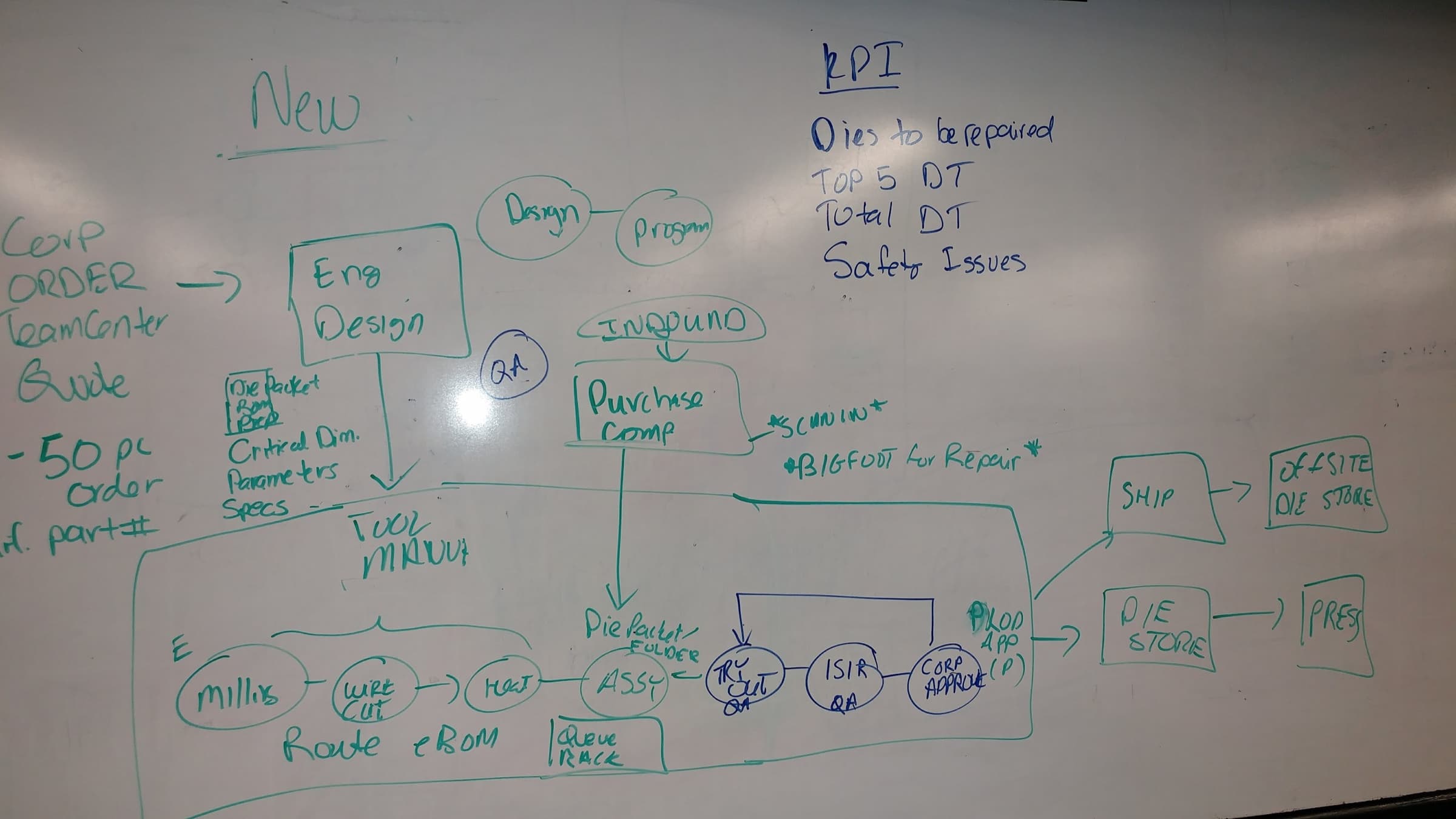
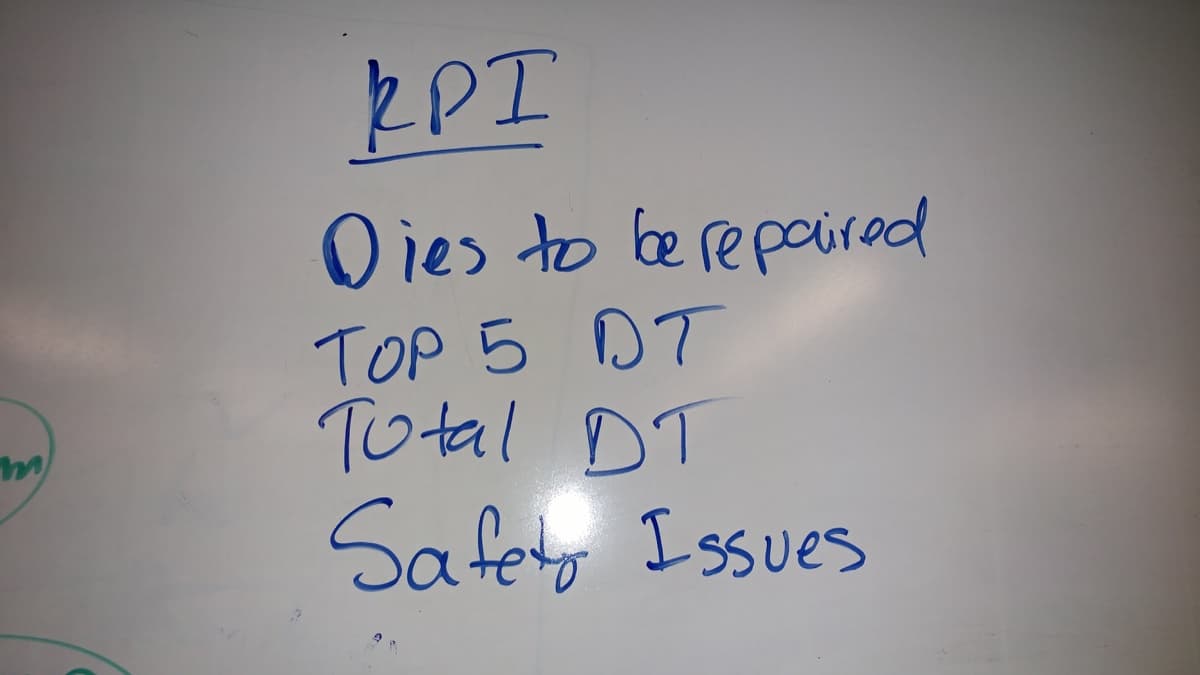
Send us a photo of the process, drawn on a whiteboard or sitting in a binder, and it is running at the station in under a week. Built by the team behind seven connected-worker deployments at BSH, Bühler, BMW North America, DHL Supply Chain, and Unipres. Launch Pilot $2,500 on one line, then $1,000 per month, unlimited users, no minimums.
Connected-worker deployments led by our team:
Start with a pilot.
One line, six weeks, a price you can sign off on without a budget cycle.
Prove it on one line
Six weeks on a single production line, up to ten work instructions authored alongside your team, two RealWear HMT-1 headsets included. One invoice at $2,500, not a subscription commitment. Most plants start here.
Start a Launch Pilot →You already know you need integration
Quick Start covers integration with your MES, ERP, CMMS, PLC stack, and computer-vision systems if you have them. Dedicated success manager. Deployment timeline matched to your launch schedule. Priced by scope.
Book a Quick Start call →What a Quick Start covers →Seven plants. One line our competitors cannot write.
Seven connected-worker deployments across automotive, appliance, industrial, and logistics. BSH. Bühler. BMW North America. DHL Supply Chain. Unipres.
We implemented, customized, integrated, trained, and supported those rollouts. For two of them we shipped the operator experience under the customer's own brand. We learned what works at that scale, what breaks, and what a plant actually needs on the floor. ForgeOS is what we built when we wanted to do it our way.
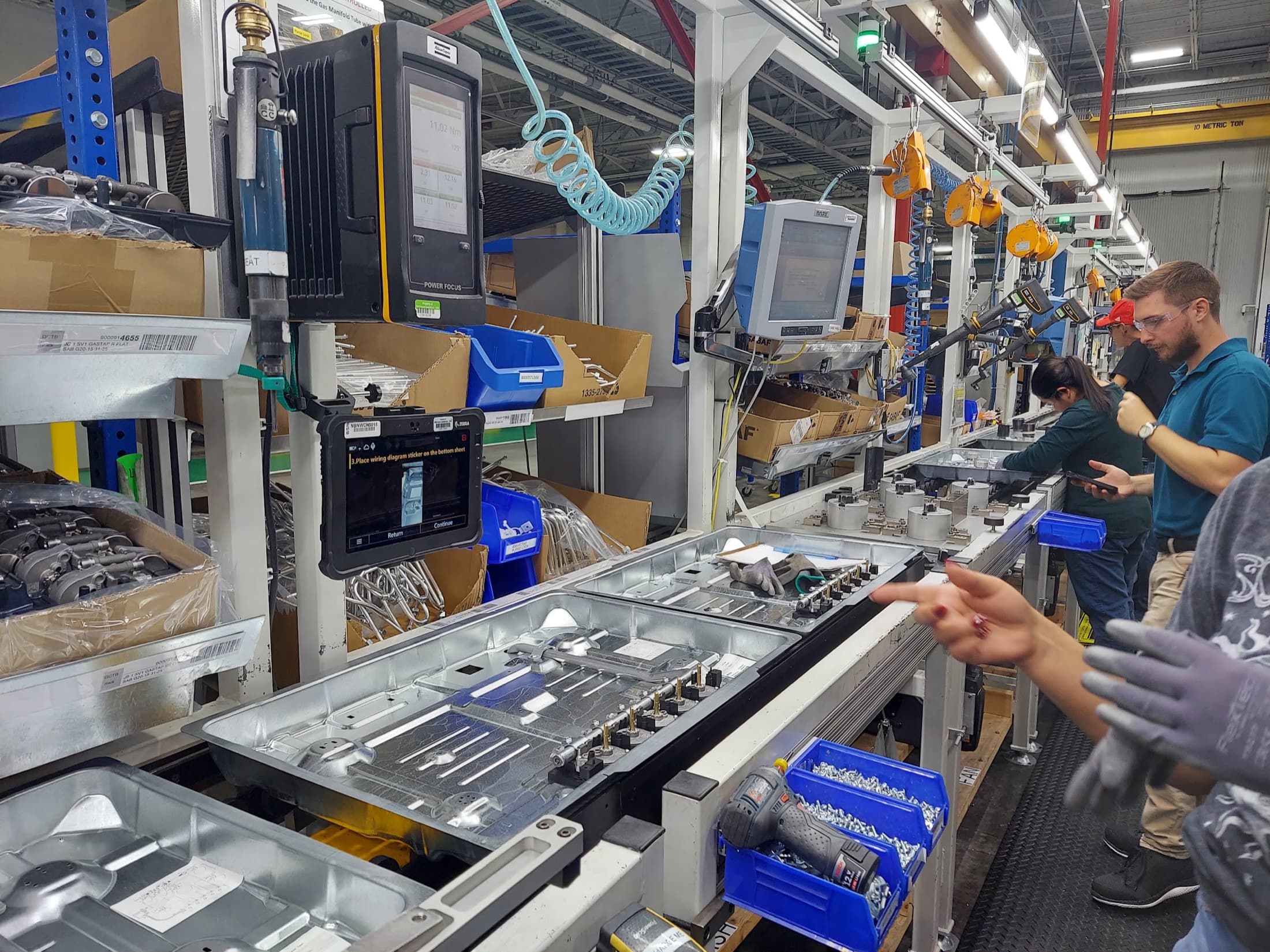
AI-assisted work instruction capture on a Bosch cooktop assembly line.
The video shows ForgeOS Method's WI capture workflow running on a Bosch Siemens Hausgeräte cooktop assembly line. AI-assisted instruction authoring from live observation of the operator at work. The same capture interface that ships in ForgeOS Method today.
BühlerVision, a white-labeled connected-worker product, branded by Bühler, built by our team.
Bühler Group, the global leader in food and feed processing equipment, selected our team to build the customer-facing experience layer for BühlerVision, their flagship remote service offering. Bühler positioned it under their own brand. The product remains in active use as part of Bühler's global service standard.
Bühler press release →Underlying connected-worker engine licensed from Ubimax/TeamViewer Frontline. Customer-facing product experience and integration delivered by our team.Smart glasses for service technicians, deployed across BMW of North America's U.S. dealership network.
Our team led the original smart-glasses deployment to BMW of North America's U.S. dealership network and the 2023 device refresh that introduced new hardware to the dealership fleet.
BMW Group press release →Service-technician deployment at BMW dealerships, not BMW manufacturing operations. Underlying smart-glasses platform licensed from Ubimax/TeamViewer.Vision Picking, the world's largest industrial smart-glasses deployment.
Our team led implementation across DHL Supply Chain sites globally, with multi-site deployments running as recently as 2024.
Supply Chain Digital article →Underlying Vision Picking product licensed from Ubimax. Our team led implementation, integration, and operational rollout.Digital work instructions deployed at Unipres, a Tier 1 automotive stamping supplier.
Unipres, a Tier 1 automotive stamping and forming supplier, runs digital work instructions our team deployed for their assembly and production operations. The platform shares its codebase lineage with the authoring and delivery layer that ships in ForgeOS Method today.
Two further deployments, in industrial equipment and precision machining, are counted toward the seven and are not named here.
What ForgeOS Method actually does.
Six things, on one screen, while the operator does the job. Instruct, capture, enforce, record, adapt, assist.
Playing 1 of 4 · Start
Author once, in any format you have.
Engineering hands you a CAD file and a PDF spec. The senior operator on Line 2 does the build the right way and you record three minutes of video. ForgeOS Method turns those three inputs into a structured work instruction in minutes, ready to revise and push to the floor.
PDF, CAD, video, voice recording. Author from whatever you actually have, not whatever a software vendor wishes you had. Digital work instructions and paperless work instructions start here.
Quality built in, not bolted on.
SPC checkpoints at the operator step. Non-conformance reports created from the line, with the WI revision and the operator's last action attached automatically. The audit trail builds itself.
Most WI tools stop at “show the operator the right step.” ForgeOS Method closes the loop. When the floor finds an issue, it routes back to a WI revision suggestion. Same defect does not happen again three months later.
Every job leaves a record. Nobody types it in.
The instruction already carries the routing and the revision, and it is already at the point of work. Add the unit identity and the thing the operator reads becomes the thing that writes the record. There is no second system and no end-of-shift data entry, because the record is a by-product of the job rather than a task on top of it.
Your industry has a name for the result. Electronic traveler, as-built record, build record, component genealogy, birth certificate. They are the same artifact under six names, and this is how you produce one without a twelve-month implementation.
What lands in the record
- Unit serial or lot identity
- The work instruction revision actually displayed
- Component and lot genealogy
- Measured values against spec limits
- Pass and fail results per checkpoint
- Operator, station, and timestamp
- Deviations with their disposition
- Corrections appended, never overwritten
For when the job is not the standard job.
A different variant, a newer revision, a scanned serial that routes differently, a check that just failed, a fault code on the machine. The sequence branches to match what is actually in front of the operator instead of making them hunt for the right page in a binder that covers nine configurations.
And when the instruction runs out, which it will, a specialist is one tap away on the same screen. Hands-free on a headset, seeing what the operator sees, talking them to the next step. What gets solved on that call becomes the next revision, so the next person does not need the call at all.
The instruction branches on
Product variant, revision and effectivity, scanned serial or lot, the result of a previous step, an equipment fault code, and operator certification level.
Remote assistance is not new to us
Our team rolled out remote expert support across a global service organization and a national dealer network before ForgeOS existed. It is the capability with the most deployment history behind it.
Computer vision
ForgeOS Method connects to vision systems you already run. Inference is a Quick Start integration, not something bundled into the base subscription.
Bundled hardware. Public pricing. No minimums.
$1,000 per month, unlimited users. Annual prepay at $12,000 includes two RealWear HMT-1 smartglasses at no additional cost. Additional devices $397 each. Software pricing on this page, not behind a “talk to sales” wall.
The two models you will meet elsewhere both bill for capacity you are not using. Per-station pricing commonly opens around $1,000 a month but carries a ten-station minimum, so you pay for ten whether you run ten or two. Per-seat pricing typically starts at fifty users and is quoted rather than published. ForgeOS Method starts at one operator and one work instruction, unlimited users at every tier.
| ForgeOS Method | Per-station pricing | Per-seat pricing | |
|---|---|---|---|
| Monthly price | $1,000/mo | $1,000+/mo | Quote |
| Minimum you pay for | None | 10 stations | 50 users |
| Unlimited users | ✓ | ✗ | ✗ |
| Hardware bundled | ✓ ($397 ea) | ✗ | ✗ |
| Public pricing | ✓ | ✗ | ✗ |
What digital work instructions are worth on a 50-person plant.
Plain math. No “AI savings” claims. The numbers that show up on your operating review.
1 point of OEE on a $30M plant
$200K to $400K per year
Most plants in the 50 to 150 employee range run at 65 to 72% OEE. A current-revision work instruction at the operator's point of work, with quality checkpoints built in, does not fix every OEE loss. It does take the WI-revision-lag bucket and the operator-error bucket off the table. That is typically 1 to 3 points.
4 weeks to 1 week of new-hire ramp, on six new hires per year
$30K to $60K saved
Voice-driven, scan-validated, video-clear work instructions on industrial smart glasses change the labor model for new hires. Senior operators stop being shadow trainers full-time. New hires hit standard cycle time in week one.
Avoiding one customer line-down event during launch
$50K to $200K, depending on the customer
Whatever you are launching this year needs dozens of new work instructions, training plans, and capability studies on a customer-imposed deadline. Manual authoring in Word does not scale. Authoring from CAD, video, PDF, or voice does.
One avoided IATF 16949 major finding
$25K direct cost, plus the customer relationship value you cannot price
Single source of truth for work instruction revisions. Training records tied to the right revision. Capability data tied to the right work instruction. Three clicks to show an auditor what they are asking for.
Pricing. On the page.
Start with a pilot on one line. Expand when it earns it.
Launch Pilot
$2,500 one time
Six weeks on one production line, run with your team.
- ✓Six weeks, one production line
- ✓Up to ten work instructions authored with your team
- ✓Two RealWear HMT-1 headsets included
- ✓One invoice at a fixed price, not a subscription commitment
After the pilot
What the plant pays to keep it running.
Method Annual
$12,000/ year
Includes two RealWear HMT-1 smartglasses. Additional headsets $397 each.
Method Monthly
$1,000/ month
Headsets $397 per unit.
- ✓Unlimited users
- ✓Unlimited work instructions
- ✓All software features included
- ✓No minimums, no per-seat math
Quick Start
Multi-site rollouts and integration with the systems you already run.
Questions before you start.
Under a week from a photo of the process to work instructions running at the station, with our team doing the authoring alongside yours. Most plants already have the process drawn somewhere: a board in the quality office, a routing in a binder, or a senior operator who knows the sequence by heart. That is enough to start from. Inside a Launch Pilot that first week is week one, and the remaining five are spent running the line, refining what the floor pushes back on, and building the record set.
Yes, and it is a by-product of the operator doing the job rather than a separate task. The instruction already carries the routing and the revision and is already displayed at the point of work, so adding the unit identity turns the screen the operator reads into the thing that writes the record. Each job produces the unit or lot identity, the revision actually displayed, component and lot genealogy, measured values against spec limits, pass and fail results, the operator, station and timestamp, and any deviation with its disposition. Corrections are appended rather than overwritten.
No. Producing a build record requires three things: an identity for the unit, a routing the work actually follows, and capture at the point of work. A manufacturing execution system is one way to get all three and it is the heaviest, because it asks you to model the whole enterprise before the first record exists. Digital work instructions provide the same three things from the other direction. If you already run an MES, ForgeOS connects to it rather than replacing it, and the operator sees the same screen either way.
ForgeOS Method produces as-built records, component genealogy, and electronic travelers for discrete manufacturing. It is not offered as a 21 CFR Part 11 compliant system, and electronic batch records and Device History Records for regulated pharmaceutical or medical device production are outside what it is sold to do. If your operation needs Part 11 controls and a validation package, say so on the Quick Start call and we will tell you plainly whether we are a fit.
Yes. Remote expert support runs from the same screen, hands-free on a RealWear headset, with the specialist seeing what the operator sees. It is the capability with the most deployment history behind it: our team rolled out remote expert support across a global service organization and a national dealer network before ForgeOS existed. What gets solved on a call can be turned into the next work instruction revision, so the next person does not need the call.
The Launch Pilot is a fixed $2,500 engagement over six weeks on one production line. It includes up to ten work instructions authored with your team and two RealWear HMT-1 headsets. It is one invoice rather than a subscription commitment, which makes it a smaller first decision than a full rollout.
ForgeOS Method has no minimum operator count, no minimum user count, and no minimum number of work instructions. The monthly plan starts at $1,000 with unlimited users. If you have one line and one process worth documenting, a Launch Pilot is the place to start. Most of our target customers are in the 30 to 150 employee range.
Most of the category prices one of two ways, and both bill you for capacity you are not using. Per-station pricing commonly opens around $1,000 per month with a ten-station minimum, so you pay for ten stations whether you run ten or two. Per-seat pricing typically starts at fifty users and is quoted rather than published. ForgeOS Method is $1,000 per month for unlimited users with no per-station or per-seat fees, it starts at one operator and one work instruction, and the price is on the page. It also includes two RealWear HMT-1 smartglasses with the annual plan, where hardware is normally a separate purchase. If you are evaluating a specific product alongside us, bring it to the Quick Start call and we will tell you plainly where it is the better fit.
No. A Launch Pilot is designed to be run by an operations manager or manufacturing engineer without IT involvement. We ship pre-configured RealWear devices, author the first work instructions with your team, and you continue in the browser. If you need integration with your MES, ERP, or PLC stack, that is what the Quick Start engagement covers, and we handle the integration work, not your IT team.
Computer vision is available as an integration in the Quick Start tier, not included in the base subscription. ForgeOS Method connects to existing computer vision systems you already have deployed. We do not bundle a CV inference engine in the base product. If you are evaluating CV for quality inspection alongside work instructions, mention it on the Quick Start call.
The annual plan at $12,000 per year includes two RealWear HMT-1 smartglasses at no additional cost. If you need more devices, additional units are $397 each, the same price we sell them at regardless of quantity. There is no volume minimum for additional hardware. Devices ship pre-configured from our office. If you are on the monthly plan and want to add hardware, you can purchase devices separately at $397 each at any time.
Quick Start is our assisted deployment tier for manufacturers who need integration with existing systems, multi-site rollouts, or a faster path to full deployment. It includes integration with your MES, ERP, CMMS, PLC stack, and computer vision systems if applicable. You get a dedicated success manager and a deployment timeline matched to your launch schedule. Pricing is quoted based on scope. Book a Quick Start call to get a scoped estimate.
Work instruction content, operator interaction data, and quality checkpoint records are stored in ForgeOS Method's cloud infrastructure hosted on AWS US regions. If your operation requires data to stay on-premise, whether that is an air-gapped facility, a defense contractor, or a CMMC requirement, that is handled through the ForgeOS Platform on-premise deployment, not ForgeOS Method. For most manufacturers, the cloud deployment meets their data requirements. Specific data handling questions can be addressed on the Quick Start call or by emailing info@newforgetech.com.
New to digital work instructions? Read the complete guide: What Are Digital Work Instructions in Manufacturing? →
Working out what your customer or auditor is actually asking for? Traveler, batch record, device history record: six names for one thing →
Your next product launch does not have to be a fire drill.
Digital work instructions running on the floor in days. Authored from CAD, video, PDF, or voice. Voice-driven on industrial smartglasses. Quality built into the step. Audit trail that builds itself.
Launch Pilot, $2,500. Six weeks on one line, run with your team.